Why Does My Lawn Mower Lose Power In Tall Grass?
Have you noticed your lawn mower losing power while cutting tall grass? This article will provide tips and effective techniques to use your lawn mower on overgrown lawns without frequent stalling, helping you save time on this routine household task.
What is Considered Overgrown Grass?
Determining what height of grass is considered overgrown is important. Grass exceeding a height of 6 inches is generally considered overgrown and cutting at this height at the lowest cutting height would test most entry-level lawn mowers.
How to Adjust Cutting Height?
The cutting height of your lawn mower is effectively the distance between the blade located at the bottom of your lawn mower and the ground. The way to adjust the cutting height of your lawn mower may vary from our example shown here:
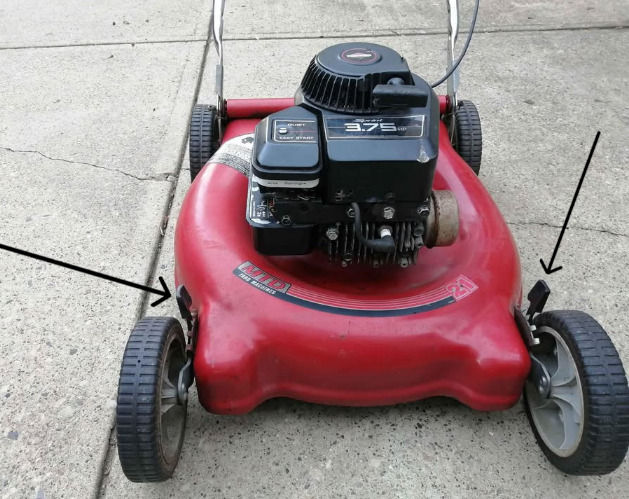
Look for levers like the ones shown located near the wheels of your lawn mower. It may be equipped with one or more handles depending on the model. Ensure if equipped with more than one adjustment lever, that all wheels are set to the same height setting. This will ensure an even, level cut.
Try to Always Practice the 1/3rd Rule
When mowing your lawn, avoid cutting more than 1/3rd of the overall length of the grass blade's length. Doing so is not only unhealthy for your lawn, but in the case of an overgrown lawn may simply cause the engine to stall out. For more insights into how to best mow your lawn check our blog post here: Learn How to Use a Lawn Mower Like a Seasoned Pro!
Assess Your Blade

Assess your lawn mower blade for dullness. Dull blades use more horsepower and are not only unhealthy for your lawn but can contribute to engine bog downs. Large nicks or dents hint at potential obstruction strikes. Check out our post here: How to Use a Lawn Mower: Sticks and Stones May Break Your Blade! on the best way to avoid striking hard objects with your blade and why its harmful!
Different Types of Blades for Different Applications
Standard blades can be used for side discharging or bagging. High lift blades like the one shown above are for mainly bagging applications exclusively. These blades tend to use the most horsepower. Mulching blades can have extra cutting surface area or serrated teeth. Some blades can perform all three functions of bagging, mulching or regular cutting. Consult your owner's manual on the recommended blade for your model and application.
Cut Sensibly
For example, if you're using a basic lawn mower with a smaller 140cc engine (which indicates the engine's displacement size and relative power) and it's incorrectly fitted with a high lift blade—meant for bagging but used on a side discharge model—you'll have a tough time mowing severely overgrown grass in one pass. In short, make sure the blade's function matches the lawn mower's capabilities. Use regular straight blades for a side discharge unit and mulching or bagging blades for more powerful, bagging 3-in-1 units.

Avoid cutting in wet grass and ensure there is no buildup under the deck obstructing the mower blade. Try to avoid taking a full width of cut, if the unit is equipped with a side discharge chute, allow this side to pass over previously cut sections of the lawn for proper air flow and clipping dispersal. A width of cut is the side to side distance of the cutting deck of your lawn mower; so to avoid taking a full width of cut, ensure a portion of the lawn mower is traveling over a previously cut section.
Ensure your lawn mower is being used with the correct blade and is powerful enough to handle the intended cutting application to avoid a frequently stalling engine!


Comments