Choosing the Right Type of Lawn Mower for Your Lawn
Updated: Sep 4
With all the features and styles of lawn mowers available, making the right choice that suits your specific lawn care needs can seem daunting. This article sets out to make the decision process easier by presenting what kinds of mowers are available, their pros and cons, and how they stack up against each other, allowing you the consumer make the most informed decision.
Traditional Reel Lawn Mower
These kinds of mowers normally do not feature a gas powered engine or a traditional steel deck. Instead they use curved scissor-like blades. They can feature a catcher bag, and can be lightweight. Furthermore they require low maintenance, produce zero emissions and little to no noise pollution. Reel mowers are best suited for smaller lawns where operator fatigue is likely not a factor.

Self-Propelled
Self-Propelled lawn mowers normally feature a larger engine with more bells and whistles such as an automatic choke system or an electric key start. They are normally larger and require fewer passes to cut more area but are generally less maneuverable. They feature a gasoline powered engine and a transmission drive to power the drive wheels. The downside is that they require more overall maintenance such as oil changes, blade sharpening and transmission services or repairs. These lawn mowers usually have 3-in-1 capability of bagging, mulching and side/rear discharging.

Battery and Corded
Typical battery powered lawn mowers provide no cord management or gas headaches. The downside is they do not possess the raw cutting torque gas powered engines provide. They are normally ideal for small to mid-sized lawns. Corded mowers provide plug and mow convenience with unlimited mow time so long as an outlet is within reach.

Gas-Powered
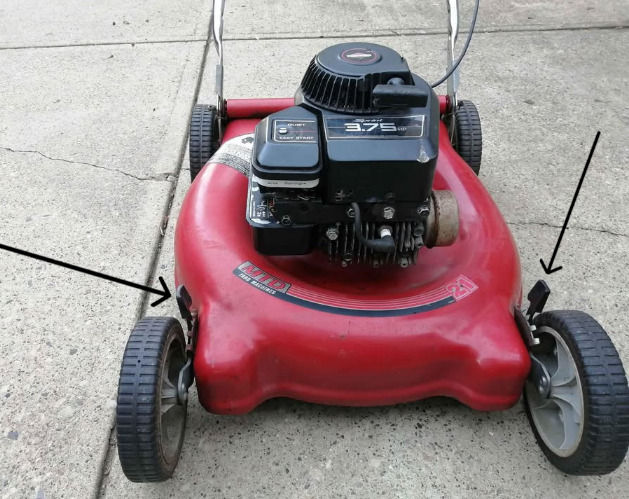
Similar to self-propelled but without the wheel driving transmission. Can feature 3-1 capability or more simpler side discharge and or bagging only models. Require the same maintenance as self-propelled such as oil changes, gas maintenance and blade sharpening, less the transmission maintenance required for self-propelled. These can range in suitability for small yards to larger yards.

Are you considering buying a used gas-powered lawn mower? Our Ultimate Lawn Mower Buyer's Guide can help you find the perfect used option to fit your budget. Learn secrets on how to avoid buying a lemon!

Other Features to Consider
Cut Path or Deck Width
Mowers will feature different sized cutting widths usually ranging from smaller 15" decks or cut paths to larger 22" (or larger) on commercial models. Larger cut widths can reduce mowing time required.
Cutting Capability
Bagging features on gas powered implements require greater horsepower and a high lift blade. Bigger sized engines producing more power are generally required.
Storage Requirements
Smaller units require smallest areas for storage. Some mowers feature stow and go fold-ability as a selling feature. Match size of unit to your storage space.
Upkeep
Gas powered lawn mowers require more maintenance and upkeep than battery, corded or traditional reel mowers. Oil changes, blade sharpening, and gas management is required for annual
reliability.
Wheel Size
Bigger wheels can make pivoting and traversing slopes or hills a breeze.
Overall Size
Greater size generally means greater weight and potential operator fatigue. Also handling and maneuverability is also reduced with larger machines.
In Conclusion
With all of the features and models available, whatever your lawn size, there exists a perfect lawn mower model to match your lawn upkeep needs. Hopefully this article was able to help you narrow down your search and bring you one step closer to achieving lawn care satisfaction!


Comments